


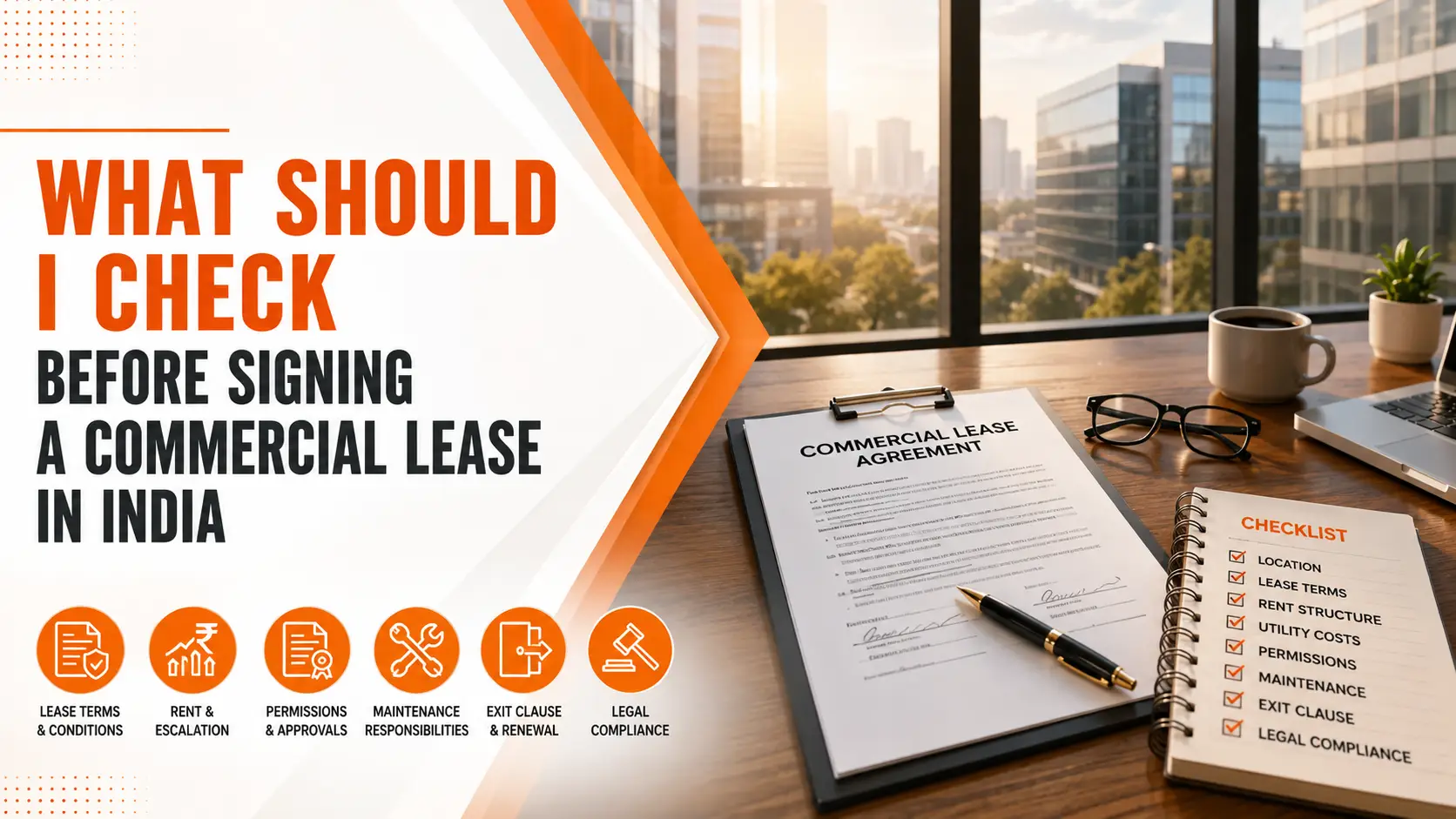
Key points to consider before signing a commercial lease agreement in India include the lease term, rent, security deposit, escalation clause, permitted uses, maintenance obligations, termination provisions, property documentation, and local compliance requirements. A commercial lease is an important business agreement, so you must understand all the terms before signing to avoid unnecessary costs, legal issues, and restrictions on your business. This blog answers the question, “What exactly should I check just before signing a commercial lease in India?”
The Primary Factors to Consider Before Signing a Commercial Lease in India
1. To check for property information
Before signing a lease, confirm the landlord is legally allowed to lease the unit. Request and inspect the necessary paperwork for ownership as well as any disputes, restrictions, or claims that may impact plans for the use of the premises. It is especially crucial to verify that the land and associated documents are in order before making a long-term commitment when looking into commercial land in Kolkata.
2. Understand the rules on rent and the security deposit
Note your monthly rent and any fees or other rental expenses in the agreement along with when payments are due. Make sure the lease states the exact deposit required, who may use it, the conditions under which the full deposit will be returned to the renter, and how any portion may be withheld. Avoid verbal agreements, and document all monetary obligations and arrangements in the lease.
3. Check the Rent Escalation Clause
Many commercial leases include rent increases built in over time. See how often rents will escalate and what percentage or method is used to calculate the escalation. If you know what rent you can expect in the future, you can get a good idea of your property’s overall occupancy cost and make the necessary financial arrangements.
4. Confirm the Permitted Use
Clearly define in the lease what activities you can do on the premises. Ensure that any proposed business activity meets the necessary zoning, building, municipal and other regulatory requirements. This is especially important if you’re considering different property types or have questions like, “can industrial land be used for commercial purposes?“
5. Check the Lease Duration and Renewal Terms
Check the lease start and end dates, lock-in period, renewal terms, and notice period. Long-term lock-in generally offers safety and protection; however, it can limit flexibility if the business faces unexpected changes in the future. Apart from this, we can confirm the renewal method and whether it renews at the Ganesh complex.
6. Clarify Maintenance Responsibilities
The tenant and landlord need to understand what each party is responsible for, who will do what, what and who will pay for general maintenance, building structure, public utilities, building safety, and major repairs and renovations. Defined terms in this respect will not lead to disputes. Inquire in writing about those costs that are added and know what it will cost you to live in that apartment.
7. Examine Termination Conditions
Take a look at the early termination section. See whether you or your landlord has the right to terminate the lease early. Determine how much notice you have to give and what kinds of financial punishments you might face. Knowing what will happen to your security deposit and renovations at the end of the lease is also vital.
8. Ensure Licences and Compliance Requirements are checked
The premises might need to be licensed, registered, approved or have permission of some sort to be run as your intended business. Check that you will be legally permitted to run the type of business on the property you are intending to sign for. When looking into substantial financial or complicated terms in a lease agreement, you should consult a competent property lawyer or advisor.
9. Inspect the Property
Visit the site and check its physical condition before signing. Inspect electrical systems, plumbing, flooring, ventilation, parking, accessibility, security, fire safety and other facilities pertinent to your business. Record current faults and commercial land in Kolkata, and make sure they don’t get blamed on your lease.
Final Thoughts
Before signing a commercial lease agreement, thoroughly review the property and the contract itself. Reviewing the documents, the financial terms, use restrictions, maintenance, renewal, compliance, and termination provisions can help you make an informed decision. Legal counsel can help ensure the lease supports your business long-term while also providing additional protection.


