


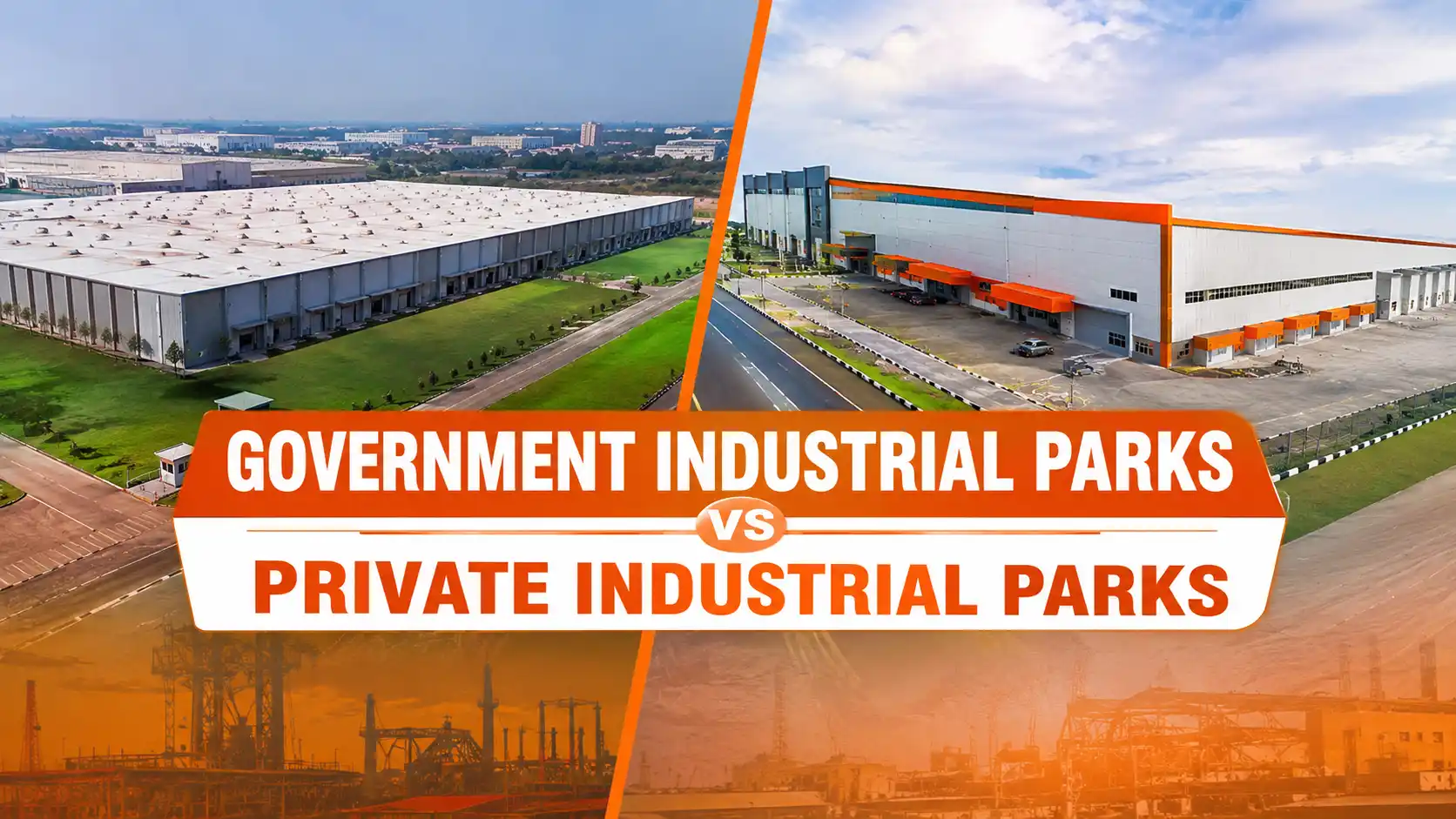
If you’re looking for commercial land, consider factors such as your business needs, budget, infrastructure, and long-term plans, and choose either private or government industrial parks. Private industrial parks offer faster development, modern facilities, flexible options, and better customisation, while government industrial parks generally offer regulated pricing, established industrial infrastructure, and stronger government policy support.
Government Industrial Parks
A government industrial park is a government-developed or managed industrial park designed to encourage industrial development and investment. These parks will typically be designed with necessary infrastructure like roads, electricity, water supplies, drainage, and connectivity. They may also offer incentives, subsidies, or other benefits, depending on the government and the type of business.
The First Benefit is the low cost
Uses of industrial land are somewhat predictable, and government parks offer good value for businesses with a small initial budget. But the application and allotment process can be lengthy, requiring detailed documentation and eligibility checks, and can take a long time to process. For manufacturers and businesses that need a well-controlled industrial environment, along with rules and infrastructure, government parks can be an ideal choice.
Private Industrial Parks
Private landlords or real estate developers own private industrial parks. Their biggest advantage is flexibility. Depending on industrial businesses’ requirements, developers can offer various plot sizes, updated infrastructure, ready facilities, and customised solutions.
Private parks can also offer strategic locations with convenient access to highways, ports, airports, railway systems and significant commercial hubs. Depending on the developer and project, the purchasing or leasing process can be faster than government allotment procedures.
According to Ganesh Complex experts, the initial investment does come with costs. An investor must verify previous records, infrastructure development, quality assurance, legal paperwork, approvals from concerned authorities, recurring maintenance costs, and future development projects.
So what options are available for you?
Depending on your priorities, you’ll need to choose between the two. If affordability, government support, and regulation are your main concerns, a government industrial park may be suitable. Modern infrastructure, location benefits, and flexibility matter more if you want quick possession.
Businesses often look for industrial land for sale in Kolkata and consider location, road connectivity, land utilities, land size, zoning clearances, and total acquisition costs. Opportunities abundant in sectors like manufacturing, warehousing, and logistics exist both in the urban location and within the industrial stretch of Kolkata.
Finally, both government and private industrial parks have pros and cons. When comparing the infrastructure, costs, approvals, connectivity, and long-term business potential of various pieces of land, investors can ultimately choose the most suitable options that will facilitate sustainable industrial growth.


