


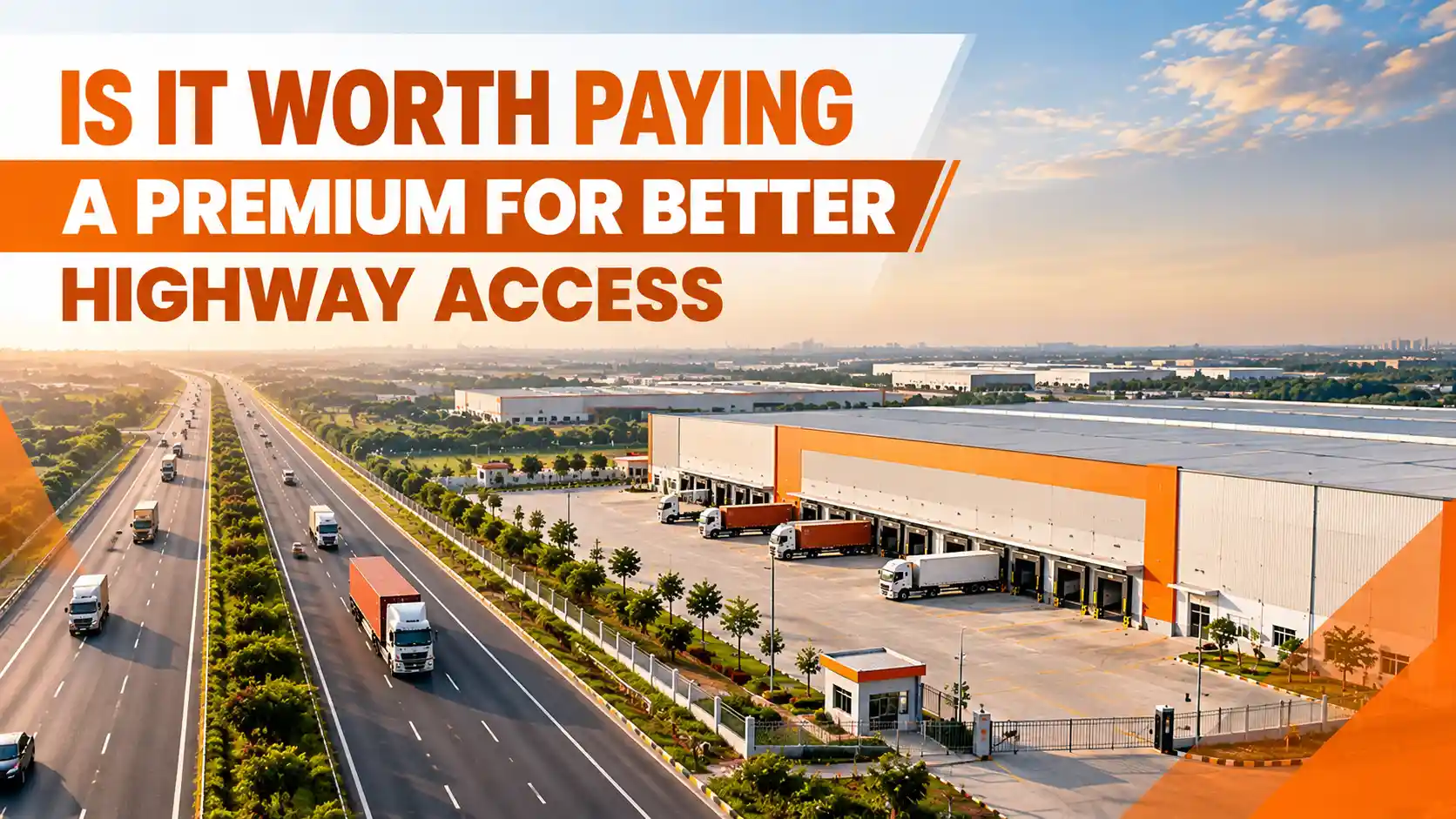
Industrial real estate is a significant investment, and highway proximity can affect your business’s productivity. Industrial land with strong highway access can benefit an industrial warehouse, manufacturing site, distribution centre, or logistics firm by improving transportation, routes, and property value.
This doesn’t mean that paying for the higher connectivity is a wise investment. The benefits of a higher premium also depend on your company’s expansion plans and requirements, transport costs, client and vendor locations, and local facilities. Check whether investing in an industrial plot for sale in Delhi will deliver real benefits or monetary returns.
Why is access to roads important for Industrial Properties?
Highways are used to transport goods from industrial plants to end customers, distribution centres, and strategic markets. Frequent truck use and highway access are supported by shorter travel times, better planning, and greater supply chain flexibility for companies with frequent transportation needs.
The same factory distribution centre serves several cities, and a site near the highway would give vehicles easy access. If an import/export warehouse regularly receives raw-material shipments, being near a highway reduces transportation concerns. A highway can also boost the property’s appeal to prospective buyers or tenants, especially for warehousing, freight, and regional distribution.
Ease of access and proximity don’t always equal convenience. Heavy traffic, road restrictions, the condition of the service road, distance from the actual highway connection (Entry and Exit points), and the plot can affect accessibility.
5 Factors to Consider Before Paying a Highway Access Premium
Before paying a highway access premium, consider these 5 things.
1. Transportation Cost Savings
First, consider whether improved highway access costs you. Avoiding unnecessary detours, travel times, and gas costs can be achieved by driving shorter distances to areas that have easier access to regional highways.
This suits organisations that transport goods regularly and/or have many vehicles. Estimate your car’s expense this year and in the future. While location matters, ask yourself whether the added expense is worth it.
2. Distance from Customers and Suppliers
If it improves access to all the points it needs to cover, good highway access can be important. A location close to a highway can also be unsuitable if demand is low or suppliers, ports, rail terminals, or distribution centres are far away.
When planning industrial plots for sale in Delhi, businesses should consider locations close to markets & suppliers. Consider the whole journey, not just the road to the motorway.
Vehicle movements and site access may affect overall cost, even if the station is more expensive. A more expensive station could be cheaper overall if it saves travelling time for your main routes. Review of vehicle movements and site access.
3. Vehicle Movement and Site Accessibility
Industrial Companies rely on trucks, trailers, loading equipment, and heavy equipment to run efficiently and safely. A property may have direct highway access, but access roads may be limited.
Before buying, assess other conditions like road width, turning radius, vehicle access, loading/unloading space, and access to connecting roads. Check the plot’s legal access and whether any road works are planned. Site access may be as critical to improving working conditions as proximity to the road.
4. The future demand and resale potential.
Tenants may be attracted to well-located industrial sites that offer convenient transportation and distribution. This may benefit lease-up potential and future resale value, depending on the market, road access and infrastructure, and the site’s suitability to accommodate the property.
But just because you’re on the highway doesn’t mean it will appreciate. An industrial site in a disorganised area, or one without amenities, may perform worse than its highway counterpart.
Think of the overall condition of industry in the region, the requirements of the people who may be involved, existing infrastructure, and proposed road development. Where approvals are not received, infrastructure is considered until funding is secured and the project can be delivered on time.
5. Purchase Price and Total Investment
It is most important to weigh the cost difference. The choice is similar, but less well connected, highly connected, and comparable properties. Consider also development costs for the site: potential roads, stormwater drains, power, water and any other necessary approvals. Ensure that the industrial zoning, title, and relevant approvals and access are sound.
Further, the difference between industrial and commercial properties can affect the investment, as permitted use, infrastructure, and possible occupiers vary. Be sure to check the property for industrial needs, rather than the location.
How To Determine If It’s Worth Paying for the Premium
Let’s take a look at an example. Suppose the improved, connected industrial plot costs ₹20 lakh per year, versus ₹5 lakh per year in transportation and other operating costs due to the plot’s location.
The payback period would be four years, calculated by dividing the net additional purchase cost by the annual savings. This analysis does not account for financing costs, taxes, or future operating costs, which may change.
The premium may be worth it if you plan to live in the property long-term. If you’re not saving much on the road, or if your future is uncertain, buy less expensive land.
Final Thoughts
If highway access reduces operating costs, improves logistics, and meets future company needs, paying more for better accessibility is a sound industrial investment. Judge it based on total ownership costs, the length of the actual routes travelled, site accessibility, and local supply/demand conditions, not simply on distance from a highway.
Once you have decided on the real estate, ask your real estate agent to give you a few plots and an estimate of the return on money that would be achieved if the plots were made more connected. The best plot isn’t necessarily the one closest to the highway; it is the one easiest to buy and the one that offers the greatest return on investment over time.


