


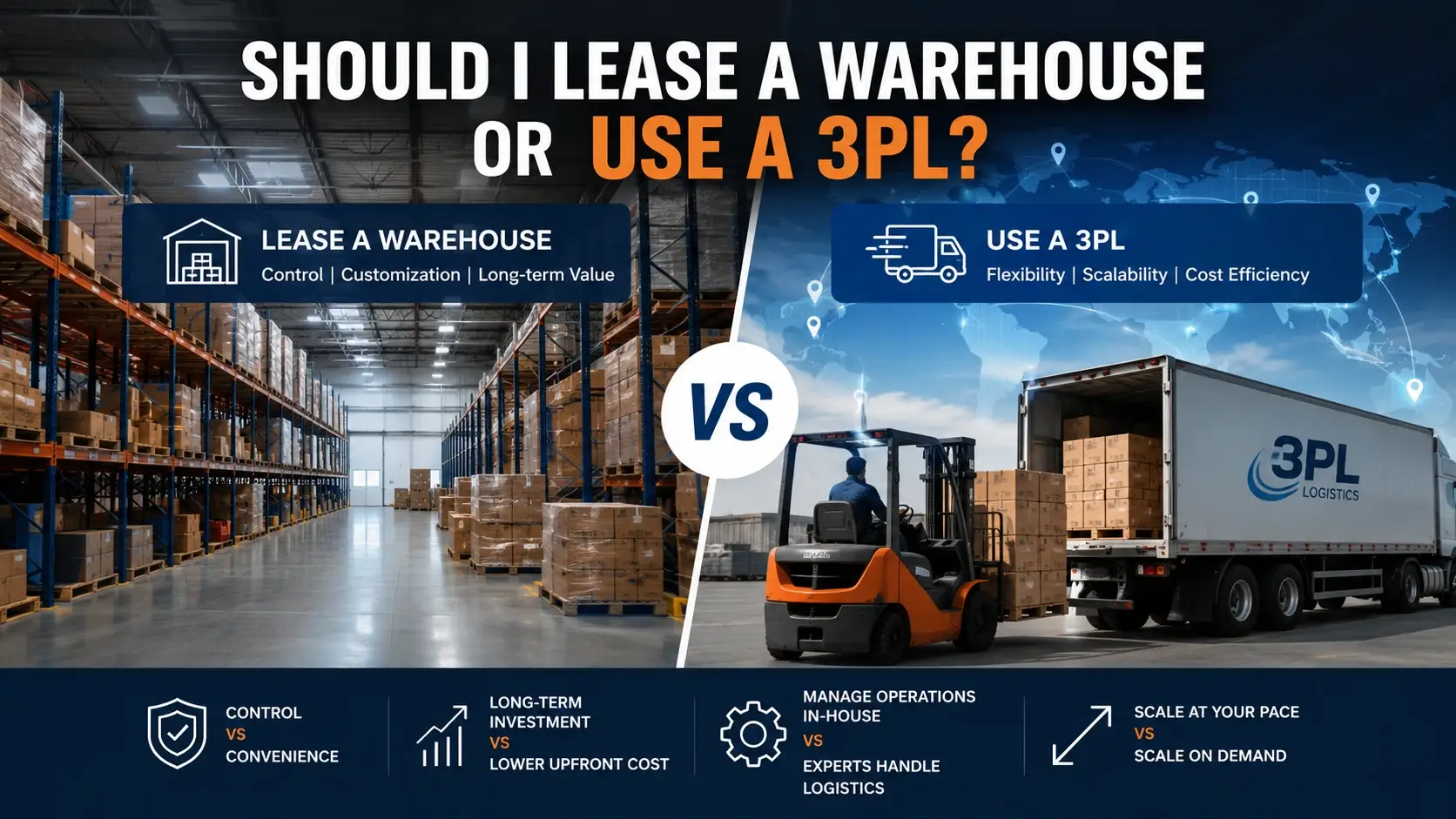
The biggest logistics challenge facing the growing business is the decision between leasing a warehouse or outsourcing to a third-party logistics (3PL) provider. The features of each choice differ and can be game-changers, but it depends on how much inventory you need, what you want to do in your business, how much money you can invest, and what your long-term goals are.
When looking at a warehouse for sale in Kolkata, it is important to understand the differences between these two options so you can make the best possible decision.
The advantage of leasing a Warehouse: More control, more long-term value
But by leasing a warehouse, your business has complete control over inventory management, storage layout, order fulfilment, and daily operations. It is ideal for businesses that handle large quantities of items and require specialised storage devices. It is indeed possible to lease a warehouse and customise the space to meet the business’s needs.
According to the experts at Ganesh Complex, you can design your racking, cold storage, loading docks, or even your automatic inventory management however you desire, depending on your needs and operations.
If a business is looking to set up a long-term operation, it should invest in a warehouse for sale in Kolkata to build real estate assets and reduce reliance on third-party service providers.
Benefits of Leasing a Warehouse
- Full inventory and operations management system
- Customised storage and workflow
- Provides more privacy and security
- Most appropriate for large volume companies
- There may be long-term savings in costs which could be realised
Leasing also involves staffing and maintenance, utilities, equipment financing, and warehouse management.
| Benefits of Leasing a Warehouse |
|---|
| Full inventory and operations management system |
| Customised storage and workflow |
| Provides more privacy and security |
| Most appropriate for large volume companies |
| There may be long-term savings in costs which could be realised |
The advantages of relying on a 3PL: flexibility without the investment in infrastructure
A 3PL can handle your returns and all manner of packaging, shipping, and even warehousing, but they can do it for you as well. Instead of investing in infrastructure, businesses pay only for the storage and logistics used.
For ecommerce and startups that are prone to seasonal demands, this kind of service is particularly attractive. So, through the help of a 3PL company, you can simply scale without having to invest large amounts. Advanced warehouse management systems, skilled personnel, and broad transportation resources of established 3PLs contribute to your quick delivery.
What are the benefits of a 3PL?
These are some of the advantages of a 3PL:
- Budget-friendly, with low initial costs
- Lower upfront investment and affordable
- Flexible storage capacity
- Growth at lightning speed in terms of business
- Automated processes that relieve staff of manual tasks
- Automation that takes tasks away from staff
- Logistics know-how and technology
After that, the trade-off is definitely diminished since things run smoothly without interruptions, stock is managed, and a third party handles customer fulfilment.
| Benefit | Information |
|---|---|
| Budget-friendly | Low initial costs. |
| Lower upfront investment | Affordable. |
| Flexible storage capacity | Storage can be adjusted based on business needs. |
| Growth at lightning speed | Supports fast business growth. |
| Automated processes | Relieve staff of manual tasks. |
| Automation | Takes tasks away from staff. |
| Logistics know-how and technology | Access to logistics expertise and technology. |
What is the best option for your business?
It will all depend upon your business model. While leasing a warehouse is mostly suitable if you:
- Need full control of operations
- Keep large stocks of inventory on hand.
- Make detailed arrangements for future growth
- Want to make a proper investment in commercial property
- Need special storage requirements
Of course, a 3PL is a great choice if you take the following into account:
- Have a startup or growing business
- An ever-changing inventory situation
- Interested in reducing up-front costs? Save on capital costs?
- Need for an immediate expansion of the market
- Want to focus on both sales and customer acquisition rather than logistics
As a business expands, some companies switch from using a 3PL to operating their own warehouse for improved efficiency and financial returns.
More Related Questions About Warehouses
How Much Warehouse Space Do I Actually Need for My Inventory?
Choosing the right warehouse size can reduce costs and improve efficiency. Learn how to calculate your storage needs in How Much Warehouse Space do I Actually Need for my Inventory before making a decision.
Future of Warehousing in Tier-2 Cities
Tier-2 cities are becoming major logistics and investment hubs. Discover why Future of Warehousing in Tier-2 Cities is shaping the next phase of industrial growth.
Is Buying an Industrial Warehouse in Kolkata Worth It in 2026?
Planning to invest in industrial real estate? Explore Is Buying An Industrial Warehouse in Kolkata Worth It in 2026 to understand market trends, opportunities, and potential returns before you invest.
Bottom Line
Deciding between leasing a warehouse or hiring a 3PL, however, is a serious business decision that is best suited to your operational needs and business growth plans. For companies that need control and long-term stability, having assets and investing in a warehouse for sale in Kolkata may be beneficial.
Somehow, if flexibility, lower upfront costs, and fast scaling are among your new priorities, a 3PL may prove a viable option. When making decisions, keep in mind that inventory size, operational complexity, and future growth plans should be considered.
If you’re searching for a logistics service, you’ll undoubtedly have come across the terms “warehouse” and “godown”. While the difference between warehouse and godown can give you some useful insights, it ultimately needs to be decided based on the complete plan, not just the definitions.


