


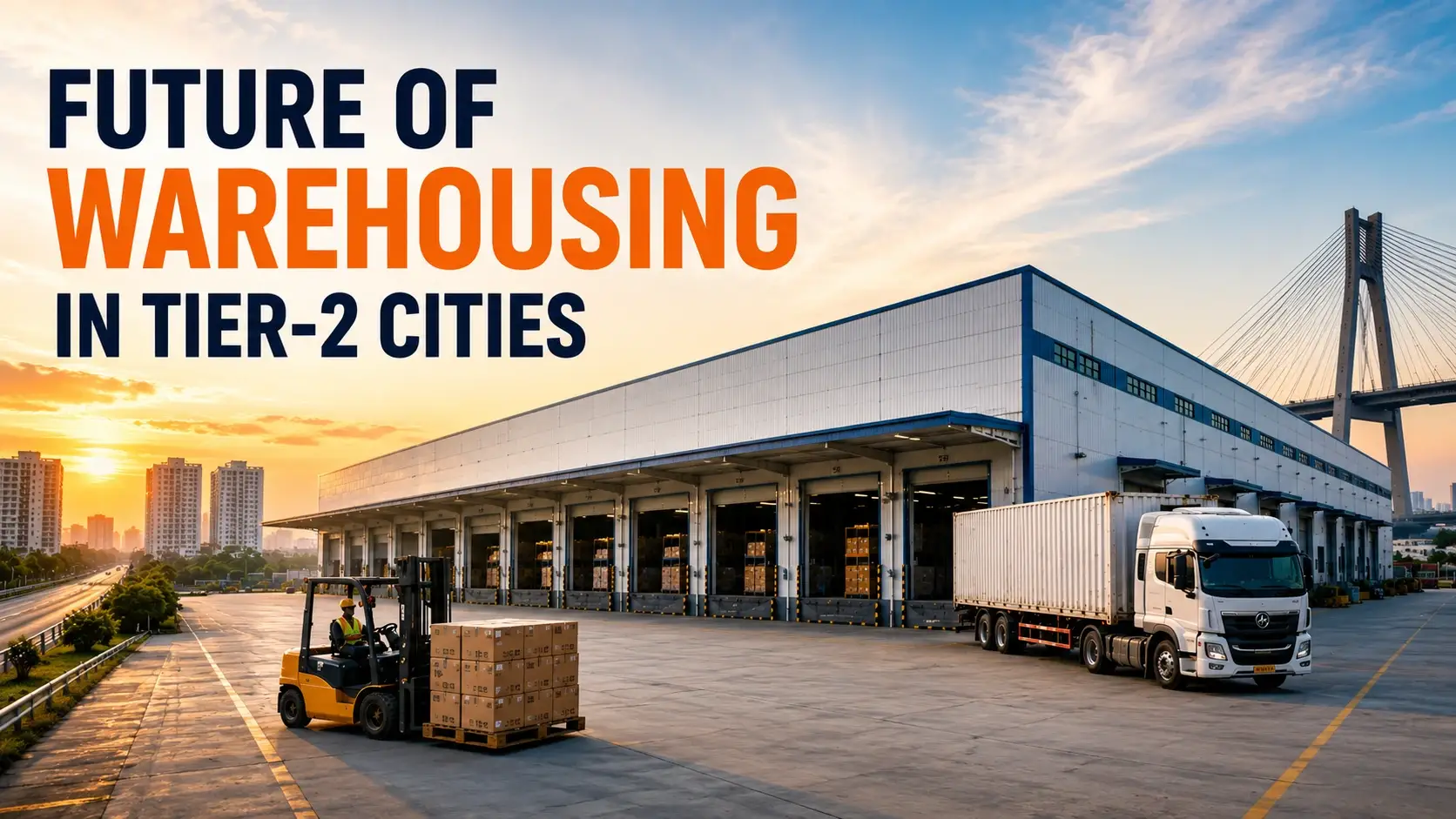
In recent years, the logistics and supply chain sector in India has already undergone a rapid transformation, and Tier-2 cities are set to become new centres of warehousing activity. Although these cities are largely driven by cost-effectiveness, scalability, and optimal location, they offer an attractive value proposition.
The future of Tier-2 warehousing is mainly fueled by infrastructure development, the e-commerce industry’s growing prominence and the need for faster delivery to regional markets.
What makes Tier-2 cities into warehousing powerhouses?
Tier-2 cities, initially perceived as just secondary logistics centres, have emerged as vital nodes in supply chains due to their attractive combination of cost advantages, growing consumer bases and improved logistics infrastructure.
Reduce land and operating expenses
One attractive characteristic of Tier-2 cities is their economic benefit. Running costs, including land values, warehouse rentals and wages, are significantly lower than in the big cities. It enables companies to invest in bigger, more efficient warehouse facilities without hurting their finances.
Strategic Location Advantage
Many Tier-2 cities are already located along industry corridors, national highways, seaports, and regional consumption centres. Moreover, the arrangement reduces transportation time. It streamlines last-mile delivery, making it easier to get products to end users and expand the market through regional warehousing.
The Role of Infrastructure in Future Warehousing
Growth Infrastructure development is one of the major factors which decides the growth of Warehousing in Tier-2. These areas have become much more accessible to the government, which has been focused on developing logistics parks, industrial corridors and expressways.
Enhance road and rail links
At times, the better the roads and rails are, the more rapidly goods can be moved between the factories;
Warehouses and end-users
It not only reduces travel time but also yields savings in transportation costs and improves overall supply chain efficiency.
The development of Regional Logistics Parks
The development of state-of-the-art logistics parks and industrial warehousing areas in Tier-2 cities is in full swing to meet business demands. Business demands and the development of state-of-the-art logistics parks and industrial warehousing areas are in full swing in Tier-2 cities. These parks are characterised by better planning, increased security, streamlined loading areas and space for additional expansion.
E-commerce is driving demand in Tier-2 cities
One of the primary drivers of demand for regional warehouses in Kolkata is the growth of the e-commerce market. One of the most significant drivers of the growing need for regional warehouses is the surge in e-commerce business.
At the same time, citizens of small cities have come to expect immediate delivery, simple returns, and access to products similar to those in metro cities.
Faster Fulfilment and Delivery
Businesses are establishing fulfilment centres near regional markets to cater to changing consumer demand. For example, there is a growing demand for a Warehouse in Kolkata, with the city serving as a major gateway for logistics in eastern India and neighbouring Tier-2 cities.
The future of warehousing will be shaped by technology
According to the experts of Ganesh Complex, technology will be the future of warehousing. In Tier-2 cities, warehousing is evolving from a mere storage facility into a technology-driven solution that streamlines operations, improves accuracy, and enhances inventory management.
Smart Warehouse Management Systems
Smart warehouse management systems, barcode scanning, automatic inventory updates, and real-time monitoring are becoming more common in businesses to improve control over storage and order fulfilment.
The 7’s of Warehousing Management are crucial in today’s retail landscape
Today, in the retail world, the 7s of warehousing management are very important. The era of complicated operations is bringing several factors to the forefront in organisations’ warehousing management, such as the 7’s of warehousing, which aim at the correct delivery of the product to the right customer at the right time, in the right quantity, in the right condition and to the right place at an economical cost. It is a critical strategy for building a resilient, future-proof warehousing strategy.
Conclusion
The opportunities presented by the Future of Warehousing in Tier-2 Cities are huge. These cities will be the pillars of the future supply chain network in India thanks to economic opportunities, improved connectivity, emerging e-commerce growth and innovative technologies. By proactively investing in Tier-2 Warehousing, enterprises do gain a competitive advantage and definitely achieve long-term success.


