


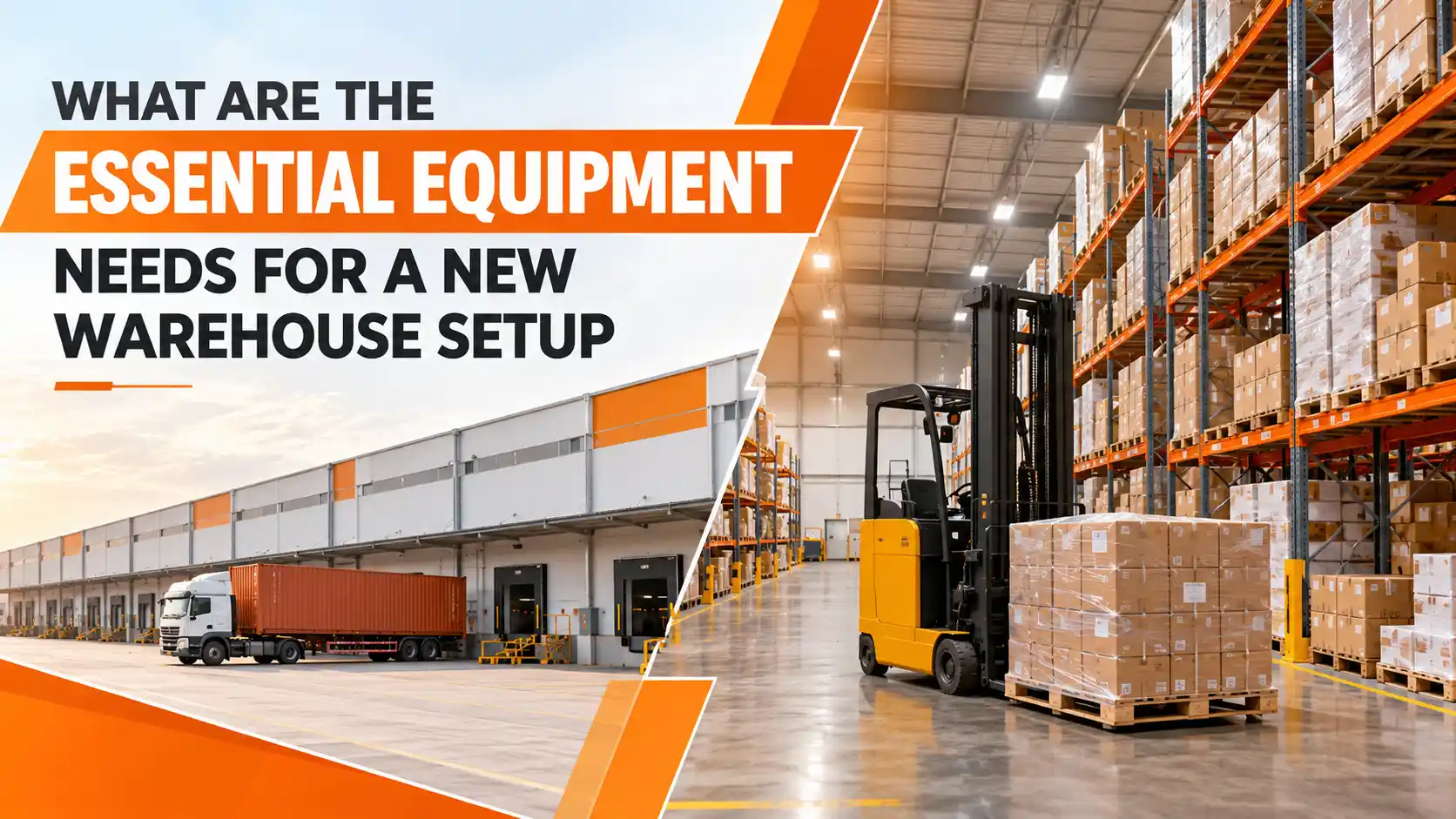
Getting a new warehouse up and running involves more than having a good building in place. Well-equipped warehouses can help your business improve efficiency in receiving, storing, handling, picking, and dispatching goods, while also improving safety and productivity. If you’re planning to open a warehouse in Kolkata for manufacturing, distribution, eCommerce or 3PL, your equipment needs will depend on the types of products, storage needs and throughput expectations.
7 Types of essential equipments required for a new warehouse setup
Stocking a new warehouse requires the right equipment and machinery to enable seamless receiving, storage, handling, picking, and dispatching. The top seven warehouse equipment to consider are storage racking, forklifts, pallet trucks, conveyors, loading and unloading equipment, packing equipment and safety equipment. Storage racking is ideal for maximising space, and forklifts and pallet trucks can easily move stock between storage and operational areas.
At Ganesh Complex, our expert believes conveyors can keep stock flowing smoothly to the next area, while loading docks and dock levellers make loading and unloading vehicles quicker and easier. Packing stations support efficient order fulfilment, while fire safety equipment, barriers, signs, and first aid equipment keep the workplace safe.
1. Storage Racks and Shelving
Storage racks and shelving systems are among the top equipment needs for your warehouse. Selective pallet racks, heavy-duty racks, cantilever racks, and shelving systems are just a few options for using your vertical and floor space. The right system depends on product size, weight, turnover, and handling procedures. Companies must leave extra aisle space for both employees and machinery to handle items.
2. Material Handling Equipment
Material handling equipment makes it easy to transport goods from receiving, storage and picking to shipping. The most common types are:
- Hand pallet trucks
- Electric pallet trucks
- Forklifts
- Platform trolleys
- Stackers
- Hydraulic lifting equipment
If you have large pallets, forklift trucks might be the way to go. If the distance is short, then hand pallet trucks might be the better buy. The cheap option is equipment that is appropriate to the load, not peak capacity.
3. Loading and Unloading Equipment
Gantries and dock levellers are used in loading docks and warehouses for stock entry and exit. A proper dock shelter is necessary to load and unload stock. Companies should track which trucks arrive most often and allow space for trucks to manoeuvre. Organising trucks for convenient loading will reduce wait times.
4. Warehouse Management Technology
Technology can improve your inventory understanding and reduce manual errors. A Warehouse Management System (WMS) can help a business manage inventory, locate items, process orders and set up orders. Other hardware tools like barcode scanners, label printers, and handheld terminals can further speed up receiving and picking. For larger operations, an RFID system or an automated material handling system may be appropriate if the volume warrants it.
5. Safety Equipment
Protection and safety measures are important to safeguard employees, inventory and the premises. Ensure your warehouse is fitted with the right kind of fire extinguishers, fire alarms and emergency lights, first-aid supplies and signage, and emergency exit signs. These equipments also provides safety barriers, rack protection, warning signage, protective equipment, and CCTV security systems. All equipment should be properly checked and maintained regularly.
6. Packing and Dispatch Equipment
For warehouses that handle customer orders, receiving and packing machinery is essential. Packing tables, weighing scales, strapping machines, carton-sealing machinery, packaging equipment and label printers can make delivery easier.
The packing area should be near the dispatch area to reduce unnecessary movement.
7. Cleaning and Maintenance Equipment
A clean warehouse is a safe, more organised place to work. First, include industrial vacuum cleaners and cleaning equipment (such as floor-cleaning machines, waste containers, and basic maintenance equipment) in your first installation order. Also, maintaining racks, forklifts, conveyors, and electrical equipment can help you prevent unforeseen downtime.
Choosing Equipment for a Kolkata Warehouse
Before a business opens a warehouse in Kolkata, it needs to know what volume it will store, product attributes, and the turnover needs of day-to-day operations. Heavy industrial products and day-to-day e-commerce fulfilment centres.
Assess the current infrastructure of a Warehouse for sale in Kolkata before you buy. Make sure the structure has loading docks, power supply, flooring, high ceilings, fire-safety measures, and space for future expansion.
Conclusion
Proper warehouse operations result from good layout design and an efficient system of storage, handling, safety, technology, and packing facilities. Don’t buy equipment just because it is available; buy it to meet real operational needs. A well-equipped warehouse in Kolkata can lead you to success!


