


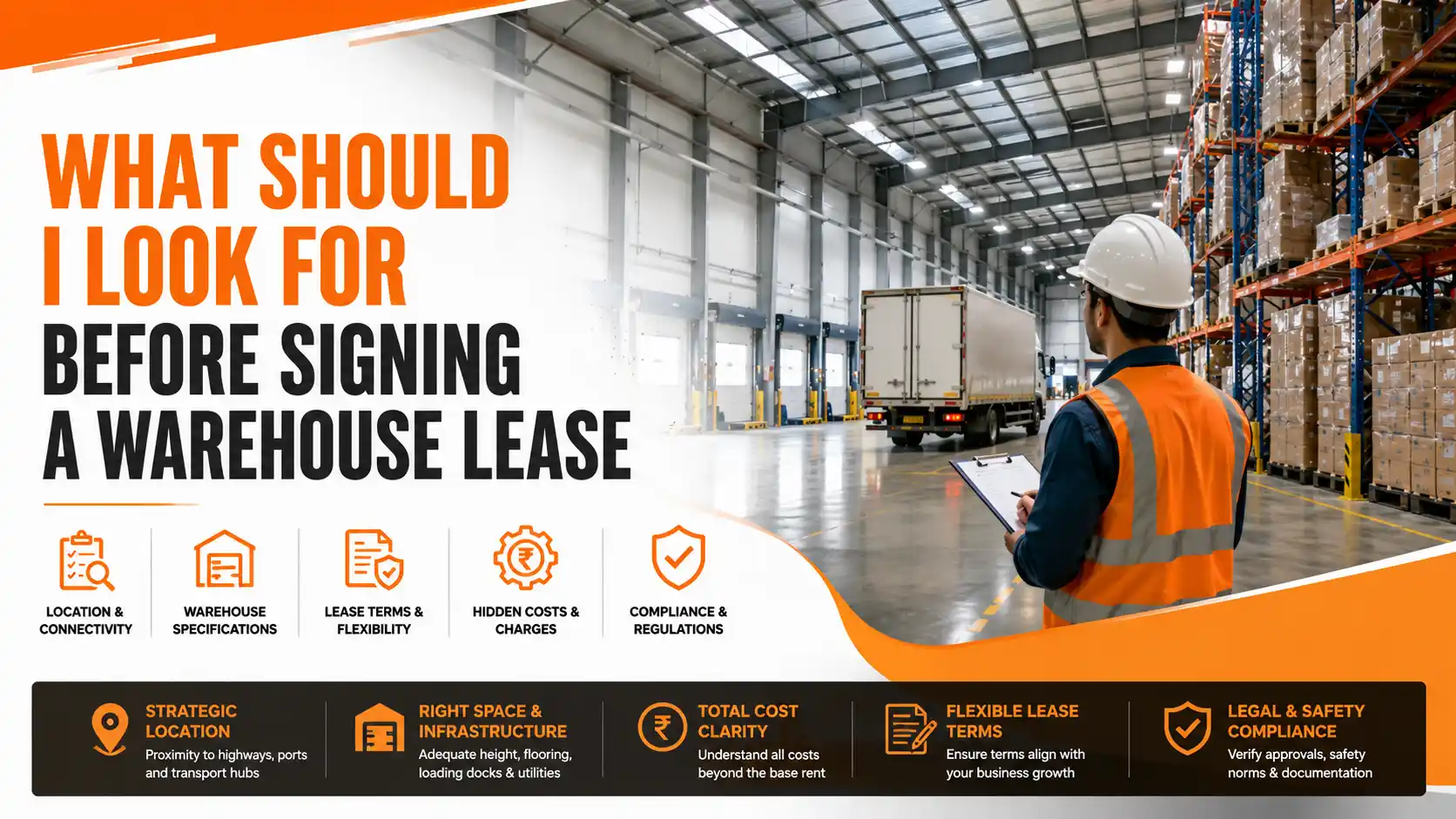
Many factors matter before signing a warehouse lease. Key factors include Location, size, layout, accessibility, lease terms, operating costs, facilities, safety, and future business needs. A warehouse isn’t merely a shelving area; it can directly affect inventory management, delivery efficiency, operating costs, and customer service. Take time to evaluate the property and contract to avoid unforeseen costs and operational issues.
8 Factors to Look For Before Signing a Warehouse Lease
1. Location and Accessibility
One of the first questions you should ask is where it is. Select a warehouse close to major roads, highways, transport hubs, suppliers and customers. Good connectivity improves transportation efficiency and can reduce transit time. Consider whether trucks can access the property and unload easily. During peak hours, verify road conditions, traffic flow, loading limits and access.
2. Warehouse Size and Layout
Verify that the warehouse has room for current and future inventory. Understand ceiling height, floor space, storage areas, loading dock capacity and space required for machinery and offices. The internal space should allow efficient workflow. “An efficient design can positively affect receiving, stocking, storing, selecting, packing, and shipping.”
3. Conditions for lease and the length of the lease.
Read the lease agreement carefully before signing. Be aware of the lease length, renewal terms, rent increases, security deposit, notice periods, and lease termination terms. Ask what happens when the lease ends and whether you can extend it. Knowing what these words mean can save you from some future headaches.
4. Total Occupancy Costs
Do not just look at the monthly rent! Inquire about any extra costs such as maintenance, utilities, property tax, insurance, security, waste removal and common area fees. Ask the vendor to provide a breakdown of all expected costs.
5. Loading and storage facilities
Check the condition and capacity of the loading and storage facilities before you commit. Know if your warehouse has enough loading docks, ramps, parking and vehicle access. If you use forklifts or other material-handling equipment, ensure the building is designed to accommodate them safely. Storage needs must also be considered. Racking systems, temperature control, ventilation and special storage areas may be required depending on your business.
6. Safety and Security
An appropriate warehouse in Kolkata should have an access control system, security, suitable fire protection, emergency exits and lighting. Consider asking questions about CCTV, Alarms, Guards, fire detection systems and emergency procedures. Additionally, decide who will be responsible for keeping safety gear in good condition and making repairs.
7. Room to Grow
Your warehouse needs may evolve as your company grows. Consider expanding storage, rearranging, adding equipment or utilities, or using additional space if it becomes available. An adaptable warehouse space is crucial to effective warehousing management.
8. Condition and Maintenance
Before You Sign, inspect the property thoroughly. Check for roof cracks, water damage on walls/rooms or ceilings, damaged or torn floor materials, faulty wiring, and drainage issues. Also assess the overall structure. Question about who is going to solve what repair problems.
Final Thoughts
Don’t choose based on price alone when selecting the right warehouse. Think of the various factors to consider: location, size, accessibility to your business and transport networks, the type of lease, your running costs, site safety, services at the facility and potential for future growth. At Ganesh Complex, our experts believe that rigorously analysing the lease contract and assessing your requirements will help you achieve 7s of Warehousing management.
If leasing isn’t the right fit long-term, Ganesh Complex also offers warehouses for outright purchase across Kolkata and Delhi NCR, giving you full ownership instead of a lease.


