


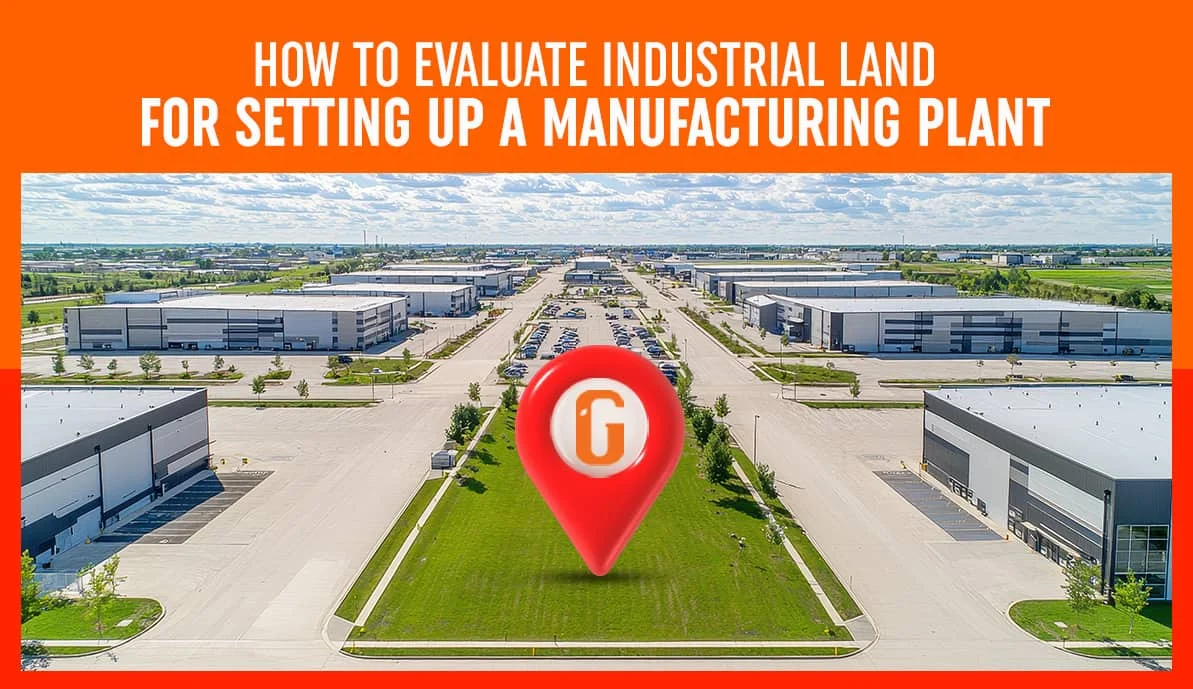
At times, setting up a manufacturing plant is a prolonged investment that requires detailed planning, financial clarity, and a carefully chosen location. Among all these factors, selecting the right industrial land is the foundation for a successful plant setup. The quality, location, and legal status of the land will undoubtedly influence your operational efficiency, logistics costs, production timelines, and future expansion.
Suppose you are seriously looking for industrial land for sale in Kolkata or anywhere in India. In that case, it is critical to follow a structured evaluation process with Ganesh Complex before making a final decision. This blog will provide a detailed guide to help you assess whether a land parcel is suitable for your manufacturing project.
Evaluating Industrial Land for the Setup of A Manufacturing Plant
1. Assess the Location and Connectivity
For any kind of industrial investment, location is the backbone. An ideal industrial land parcel should offer the following.
- Closer proximity to the suppliers and distribution hubs
- Easy access to the highways and major transportation routes
- Connectivity to unique ports, airports, and railways, if your business definitely requires bulk transport
- Minimal traffic congestion in the surrounding area
For instance, industrial land for sale in Kolkata is primarily located in Uluberia, Ragudebpur, and Ranihati, which are preferred for their logistics advantages and access to labour hubs.
2. Evaluate Zoning and Legal Permits
Prior to purchasing any Industrial land, confirm the zoning classification. The land should be specifically designated for industrial use in accordance with the local development authority’s guidelines.
Do check for
- Land use certificates
- Permissible industries (pollution-heavy, light manufacturing, and warehouses)
- Clearance from municipal authorities
- Any restrictions on construction height and building footprint
This definitely ensures you are legally allowed to set up your type of industry, even on the land.
3. Check Land Title and Legal Compliance
Indeed, legal due diligence protects you from all sorts of future disputes. Simply verify the following.
- Encumbrance-free records
- Clear and marketable land title
- Seller’s ownership rights
- Mutation, tax receipts, and sale deeds
- No involvement in litigation
Kindly ensure you hire a legal expert to thoroughly examine all documents before finalising the purchase.
4. Understand Terrain, Soil Quality, and Load-Bearing Capacity
According to the experts at Ganesh Complex, a manufacturing plant definitely requires strong land that can support heavy equipments, multi-story structures, and vibration-intensive machinery. Definitely conduct the following things.
- Geotechnical analysis
- Soil testing
- Flood risk assessment
- Drainage flow study
Clay-heavy or low-load-bearing soil will undoubtedly increase construction costs rapidly, while stable soils will definitely reduce long-term structural issues.
5. Availability of Utilities and Infrastructure
Industrial operations indeed depend on uninterrupted utilities. Always check the availability of:
- High tension electricity supply
- Drainage and sewage systems
- Water pipelines and groundwater access
- Telecom and internet connectivity
- Gas supply (if required for your processes)
- Upgrading utilities later can be costly and delay the production timelines.
6. Evaluate the Surrounding Industrial Ecosystem
Furthermore, the presence of other industries nearby is a positive sign. It definitely ensures the following.
- Faster transportation
- Easy access to the raw materials
- Availability of skilled and unskilled labour
- Faster access to repair technicians and contractors
However, regions like Kolkata’s industrial zones indeed thrive because of their existing ecosystems, making them ideal for new plant setups.
7. Study Environmental Impact Requirements
Heavy industries do require environmental clearance from all the government bodies. Kindly understand the following:
- Emission norms
- Pollution control board requirements
- Waste disposal guidelines
- Noise pollution limitations
As a result, choosing land in the designated industrial corridors definitely simplifies compliance and avoids local community conflicts.
8. Consider Future Expansion Possibilities
The manufacturing plant should be scalable. Ensure the land has room for future expansion. It is mainly free of zoning changes and is located in an area with long-term industrial growth. Enables construction flexibility, and buying slightly larger land today might save you from relocation costs in the future.
9. Analyse Cost vs. Long-Term Value
Lower land prices shouldn’t be the only driver. Definitely consider the following things.
- Road construction and levelling expenses
- Development cost of land
- Surrounding market value appreciation
- Utility infrastructure costs
- Proximity to the workforce availability
It is the industrial land that certainly offers operational savings and long-term returns, and not just affordability.
Conclusion: Choose the Right Industrial Land to Build a Strong Manufacturing Future
Furthermore, selecting the appropriate industrial land is the most important decision when setting up a manufacturing plant. It impacts everything from logistics to production efficiency, compliance and long-term expansion.
If you are searching for industrial land for sale in Kolkata, ensure you evaluate all these factors carefully before making your investment. Now, the question that arises in the mind of the reader is, Can industrial land be used for commercial purposes?
Before you finalise any purchase, it’s essential to understand zoning flexibility. Most investors ask: Can Industrial land be used for commercial purposes? The answer depends on local municipal laws. Some industrial lands enable partial commercial activity, while others require land-use conversion.
Always verify this with the local development authority to avoid legal complications. Makes the right choice and evaluates industrial land smartly, legally, and strategically to build a future-ready manufacturing plant.


