


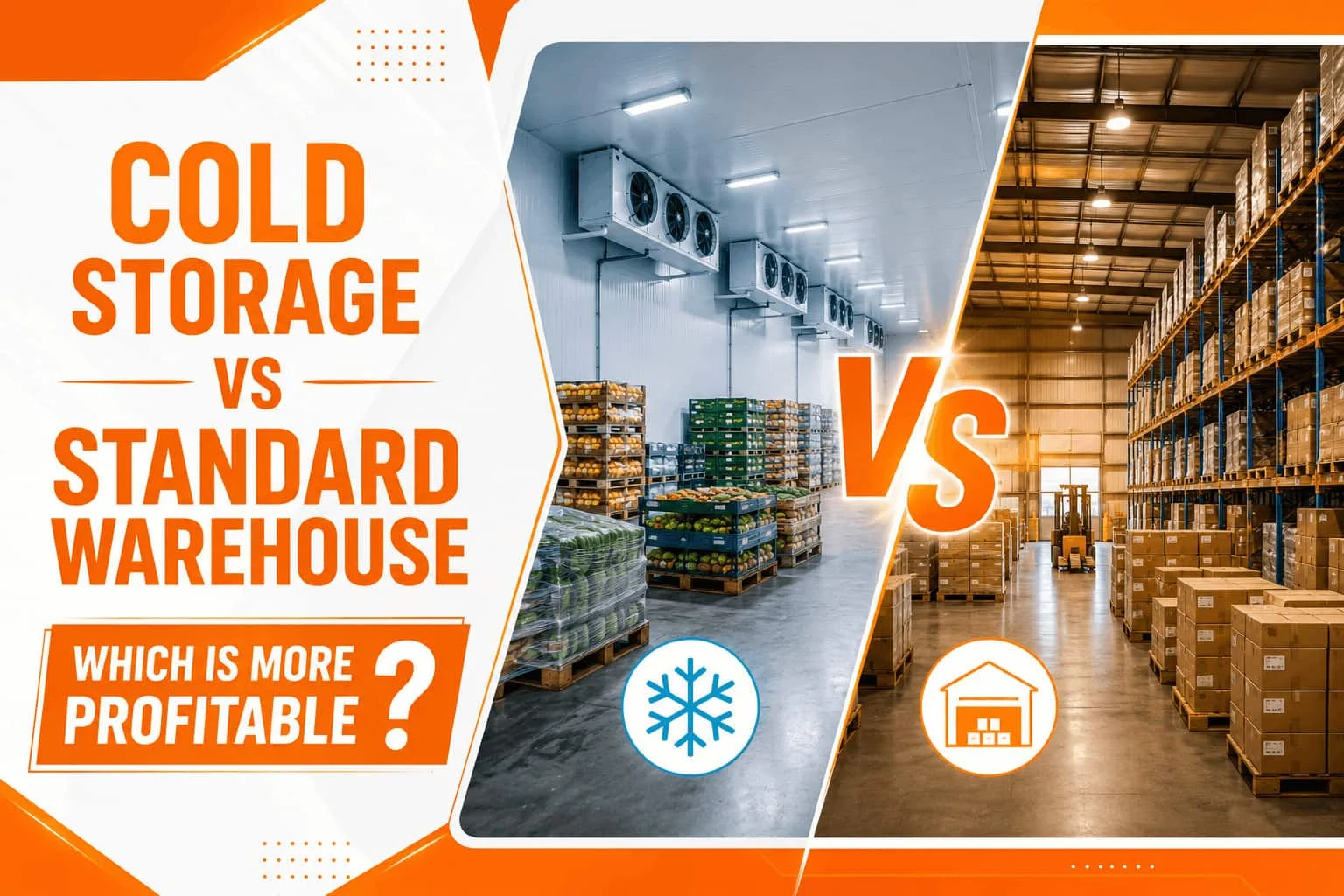
Demand for organised logistics and supply chain infrastructure continues to grow in Kolkata. With the rapid growth of logistics, e-commerce, food distribution, and pharmaceutical supply chains, warehousing has become a major investment sector. Among the most discussed options today are cold storage facilities and standard warehouses, each offering different operational models, costs, and profit potential.
If you are an investor in either of the two, you should consider certain factors to determine which is best for an industrial warehouse for sale. Check out this blog for a comprehensive guide.
Factor 1: Temperature Control
The first factor to note is temperature control, and it goes beyond the aspect of just “hot vs cold.” Standard warehouses typically maintain a temperature range of 65-75°F (18-24°C). To keep up with external temperatures and weather patterns, the room temperatures are adjusted accordingly.
In the case of Cold Storage, precise temperature control is conducted. Variable-temperature storage units, such as freezers, chilled storage, and cool storage, have separate temperature-control systems to store and protect specific types of goods.
Factor 2: Construction Variation
Standard warehouses are built primarily for space efficiency, structural stability and operational flow. In contrast, cold storage facilities use giant refrigerators or are centrally air-conditioned. Additionally, cold storage facilities may feature highly insulated walls, specialised vapour barriers, and thermal-broken concrete slabs to meet specialised storage needs.
Factor 3: Power Requirements
Maintaining a stable power supply is a major challenge in warehouse management. A standard warehouse may consume 5-10 watts or more (in general). In contrast, cold storage units can consume about 25-30 watts or more (in general).
Initially, the higher power consumption for cold storage might seem higher. However, efficiency in storing multiple product forms can benefit in the long run.
Factor 4: Specially Designed Equipment
Cold storage facilities require refrigeration units, insulated docks, and temperature-monitoring systems to protect sensitive products. Standard warehouses mainly use basic handling equipment, like forklifts and pallet racks, making maintenance and setup simpler.
Factor 5: Inventory Management
Standard warehouses focus on storage efficiency and stock movement. Cold storage facilities require stricter inventory tracking because products are often perishable and temperature-sensitive, making monitoring systems more important.
Factor 6: Staffing Considerations
Standard warehouses usually need general labour for loading, unloading, and inventory handling. Cold storage facilities require trained staff who can manage refrigeration systems and handle products safely in controlled environments.
Factor 7: Operating Costs
Operating costs are lower in standard warehouses due to reduced power consumption and simpler maintenance. Cold storage facilities have higher electricity and maintenance costs but can generate better rental returns from specialised industries.
Factor 8: Risk Management
Standard warehouses primarily face risks such as theft, fire, and damage to inventory. Cold storage facilities carry additional risks, such as refrigeration failures, spoilage, and power outages, requiring stronger backup systems and enhanced monitoring.
Factor 9: Compliance and Regulatory Requirements
If you are looking to invest in an industrial warehouse for sale, note that compliance and regulatory requirements are necessary.
Cold storage facilities must comply with strict regulations on food safety, pharmaceutical storage, temperature monitoring, and hygiene standards. Regular inspections and certifications are often required. Standard warehouses generally have fewer compliance requirements, making operations easier to manage and less costly.
Factor 10: Market Demand and Tenant Stability
The demand for warehousing depends on the industries being served. Standard warehouses see consistent demand from logistics, e-commerce, and manufacturing businesses. Cold storage facilities are witnessing rising demand from food processing, agriculture, pharmaceuticals, and organised retail sectors, often leading to longer lease agreements and stable tenants.
Which Is More Profitable?
Standard warehouses generally deliver stable, predictable returns because they require lower initial investment, simpler infrastructure, and lower operating costs. They are easier to manage, attract a broad range of tenants, and maintain consistent occupancy across logistics, e-commerce, and manufacturing sectors. This makes them a safer option for investors looking for steady cash flow with lower operational complexity.
Cold storage facilities, on the other hand, demand higher capital investment and ongoing maintenance due to refrigeration systems and energy requirements. However, they often generate higher rental yields and stronger long-term profitability because of increasing demand from food processing, pharmaceuticals, agriculture, and organised retail. With supply chains becoming more temperature-sensitive, cold storage assets tend to command premium pricing and longer lease commitments.
Overall, standard warehouses are suited for stable, low-risk returns, while cold storage facilities offer higher growth potential for investors willing to manage higher costs and operational complexity.
Conclusion
Are you interested in exploring cold storage and standard warehouse development? We can help you with the investment, paperwork, and infrastructure guidance. Connect with us today.


