


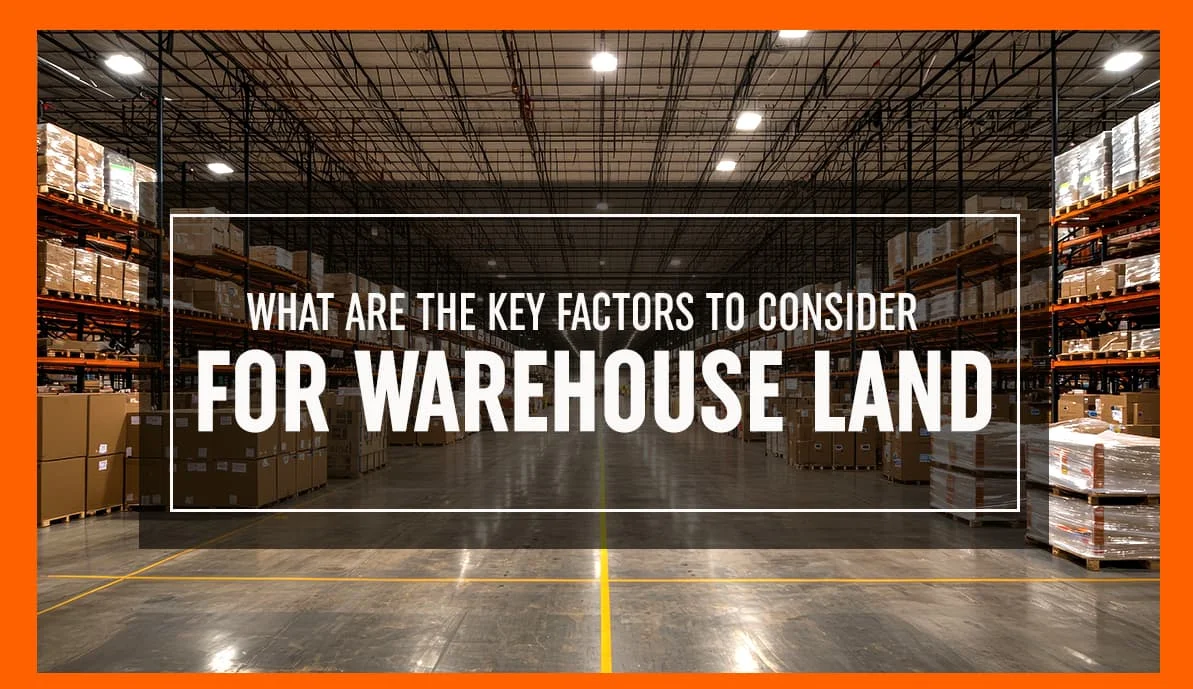
Selecting the appropriate warehouse land is the critical decision for any manufacturing, logistics, retailing, or e-commerce business. A warehouse isn’t just a storage space; it’s the backbone of supply chain efficiency. The location, size, connectivity, and infrastructure of the land do determine how smoothly your operations run, and how cost-effective they are in the long term. With the rising demand for logistics hubs and the increasing availability of industrial warehouses for sale options, choosing appropriately is more essential than ever.
Here is a detailed guide to help you understand the key factors to consider before finalising a warehouse land deal.
Top Factors to Consider for Warehouse Land
1. Location and Connectivity
Location is the first and most influential factor. Your warehouse should be strategically located to ensure quick, cost-effective transportation.
Some key considerations include the following.
- Very close to the highways and expressways
- Distance to major cities and consumption hubs
- Access to all the major ports and rail freight corridors
- Availability of last-mile connectivity
Therefore, a well-connected warehouse can consistently reduce fuel costs, shorten delivery timelines, and improve order accuracy.
2. Size and Scalability of the Land
Before selecting warehouse land, analyse your current and future storage needs. Several businesses outgrow their facilities quickly, resulting in relocation costs and operational inefficiencies.
Always consider the following.
- Total land area available for construction
- Space for expansion or additional buildings
- Room for vehicle parking, loading docks, and a turning radius
- Floor area ratio (FAR) applicable in the region.
For long-term operational stability choose a scalable land.
3. Zoning and Legal Clearances
Warehouse land should comply with local zoning laws that permit industrial and logistics activities. Therefore, purchasing land in non-approved zones can always lead to legal disputes, forced closure, and operational restrictions.
- Do verify the following, like
- Zoning approvals
- Title documents
- Land conversion certificates (if required)
- Environmental permissions
- Fire safety and building safety compliance
Do work with legal experts to avoid compliance issues.
4. Infrastructure and Utility Availability
Good infrastructure definitely impacts warehouse performance. Exploring an industrial warehouse for sale, ensure the land offers and supports the following like
- Water availability
- 24/7 electricity supply
- Sewage and drainage systems
- Strong internal road networks
- Broadband or fibre optic connectivity
- Strong internal road networks
- CCTV and security provisions
Strong infrastructure ensures efficient storage, seamless operations, and safe working environments.
5. Soil Condition and Topography
Warehouses primarily house large machinery, heavy loads, and massive inventories. According to the experts at Ganesh Complex, the land is suitable for robust construction.
Always check for the following things.
- Soil load-bearing capacity
- Elevation and slope
- Flood resistance
- Risk of waterlogging
A geotechnical survey definitely helps ensure that the land can always support large warehouse structures.
6. Labour Availability and Local Workforce Skills
Warehousing operations definitely require a consistent workforce, including that of loaders, supervisors, forklift operators, and inventory managers
Do assess the
- Local labour availability
- Wage expectations
- Skill levels
- Labour union regulations
Thus, having an accessible and affordable labour pool improves productivity and reduces hiring challenges.
7. Nearby Industrial and Commercial Activity
Being close to an industrial cluster or consumption markets definitely enhances visibility and operational convenience.
Some of the benefits include
- Fast distribution
- Easy access to suppliers
- Established utilities and infrastructure
- Lower transportation costs
This is why several businesses choose land in or near industrial parks, logistics corridors, and around the manufacturing hubs.
8. Awareness of Warehouse Management Problems
Before purchasing warehouse land, it is critical to anticipate operational hurdles you may encounter later.
Furthermore, common warehouse management problems help you to choose land that minimises future challenges.
Some common issues include the following.
- Inadequate parking and loading bays
- Poor internal space planning
- Limited automation capacity
- Poor drainage leading to moisture issue
Do choose the right land can prevent all these issues, leading to higher efficiency and reduces operational costs.
9. ROI, and Long-Term Value
The price of the land should align with your budget and long-term goals. Definitely consider both upfront costs and the property’s future appreciation.
Evaluate the following
- Land price per square foot
- Infrastructural upgrades
- Development costs
- Expected ROI
- Taxes and ongoing maintenance
In growing logistics hubs, warehouse land appreciates quickly, making it a smart investment.
Final Takeaway
Choose such warehouse land involves more than just evaluating the space; it requires strategic planning, cost analysis, infrastructure review, and foresight into future business needs. Therefore, amid increasing demand for logistics support, exploring industrial warehouses for sale in well-developed industrial zones can provide long-term operational and financial advantages.
Now, the question on readers’ minds is: Are you planning to secure the perfect warehouse land? Do explore verified warehouse properties, compare infrastructure-ready options, and find the ideal location to support long-term logistics growth. Therefore, start your search today and build your warehouse with absolute confidence.


