


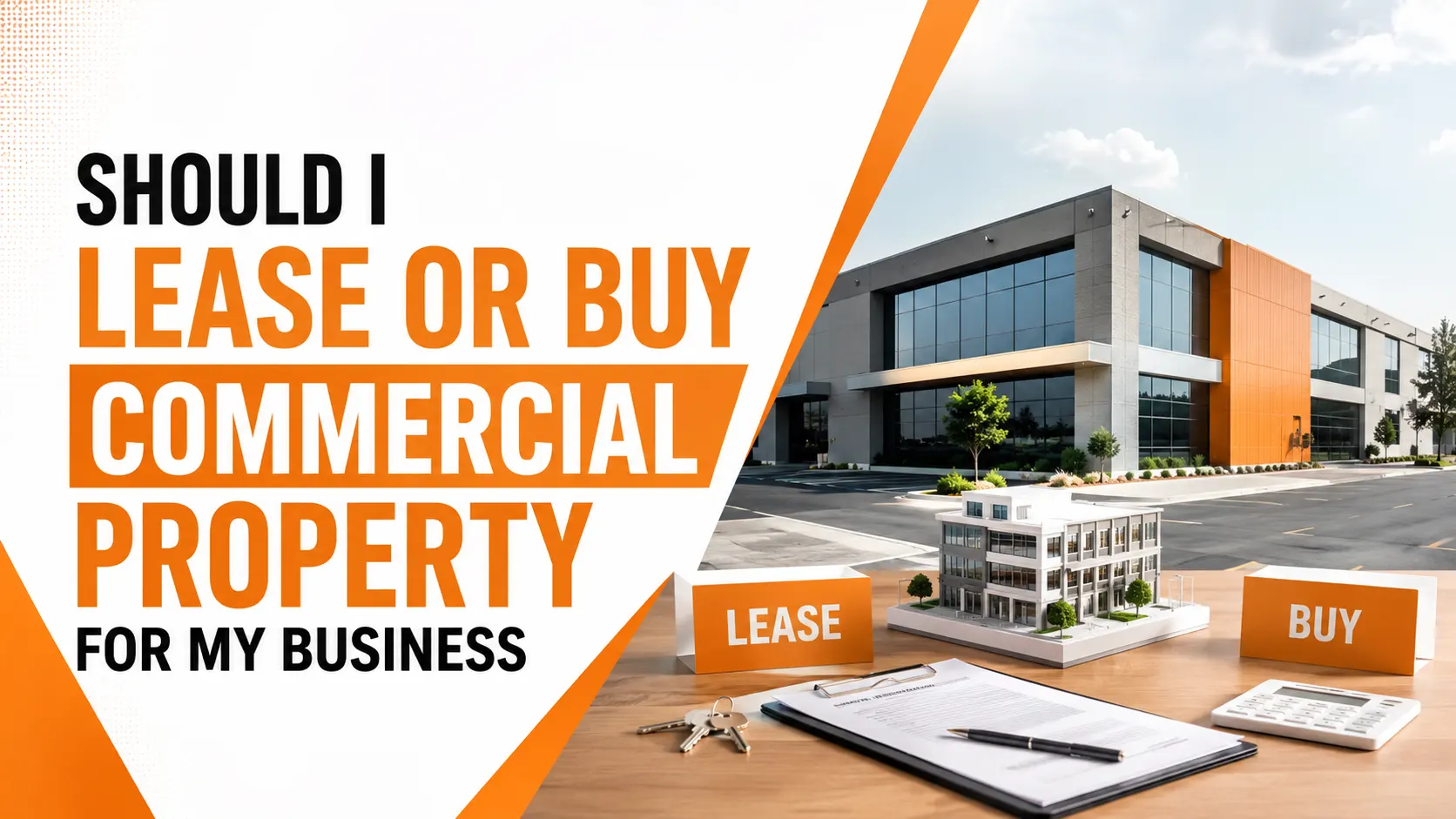
If you are deciding whether to lease or buy commercial property for your business, the best choice depends on your budget, long-term plans, cash flow, and how much control you need over the property. Leasing mostly offers better flexibility and lower upfront costs, while buying can provide long-term asset ownership and potential appreciation. Before deciding, compare both options against your overall business goals.
Leasing vs. Buying — What to Weigh
-
Leasing Commercial Property
Leasing can be a strong choice, especially for businesses that want to preserve capital. Rather than making a huge upfront investment for a property, you mostly pay rent and other agreed costs over the lease period. This leaves more money available for employees, equipment, expansion, inventory, and marketing.
-
Flexibility
Flexibility is another bonus. Your business may be expanding in the fast lane, or you may not be sure what the future holds. If you sign a lease, you don’t have to stress too much about it, especially at the end of your lease, when you can easily move into a bigger and better commercial space.
However, by signing a lease, you never get to invest in ownership over your property; moreover, you have to be well informed about the lease renewal that may lead to an increase in prices, considering the conditions and the agreement signed; hence, it would be beneficial to analyse the lease agreement carefully, along with other potential costs.
-
Buying Commercial Property
However, buying commercial property can make sense when you expect to operate from the same location for several years and have sufficient capital or financing. Ownership gives you greater control over the property and may allow you to modify the premises to meet your operational needs. Commercial property can become a valuable asset. However, depending on the location and market conditions, the property may appreciate over time.
Owners may also generate additional income by leasing unused space to other businesses.
The downside is the substantial initial investment; buyers must account for the down payment, financing costs, registration expenses, taxes, maintenance, insurance, and potential renovation costs. At times, experts at Ganesh Complex believe industrial properties for sale in Kolkata can reduce flexibility if your business requires relocation.
-
Consider Your Business Location
When valuing a commercial property, location is particularly essential. Retail companies, manufacturers, warehouse and factory owners, and office complexes all have specific needs and different criteria for a suitable building. Those seeking commercial properties for sale in Kolkata should consider factors such as consumer demand, accessibility, transport facilities, car parking, infrastructure, and potential for future expansion and growth. Companies looking to buy industrial property in Kolkata need to consider road connectivity, proximity to their customer and supplier bases, and the availability of warehouse space and its intended use.
-
Lease or Buy: Which Is Better?
There is no universal answer. Leasing may suit businesses that prioritise flexibility and want to preserve working capital, while buying may suit established businesses that want long-term stability and asset ownership.
Work out what it’s going to cost you over the number of years you anticipate using your premises to compare both leasing and buying options thoroughly. It’s not just about rental or loan costs; think about rates, maintenance, repairs, insurance, the costs involved in the buying process (including your broker and solicitor) and what the potential property value will be by the time you sell it.
Seek professional financial and property advice to evaluate risks involved in both purchasing and renting; what matters is the decision which correlates best to your business as a whole, and not the immediate expense in your current account each month.
Bottom Line
The purchase decision, rather than a lease, depends on many factors, including your company’s financial ability, growth aspirations, geographical requirements, and long-term plan for the business, and you can’t make it without reviewing all aspects of the potential property. Comparing all properties and associated expenditure, and considering the future effects on your cash flow and the mobility your decision entails, will be beneficial.
If you decide ownership is the right path, Ganesh Complex works exclusively on a sale basis, giving you full asset ownership from day one rather than a leasehold arrangement.
FAQ’s


